


Key Takeaway
Title 24 energy compliance requires California residential projects to meet the California Energy Code (Title 24, Part 6) before a permit is approved. As of January 1, 2026, all new applications must comply with the 2025 Energy Code. Projects must include a CF1R report that matches the plan set, drawings, and specifications exactly. Getting the classification wrong for ADUs or conversions is one of the most common reasons submittals get sent back.
Title 24 energy compliance is the process of proving that a California residential project meets the California Energy Code, formally Title 24, Part 6. For most residential permits, that means preparing CF1R documentation that matches your plan set, specifications, and required field verification items before you submit to the building department. As of 2026, permit applications filed on or after January 1, 2026 must comply with the 2025 Energy Code. If you’re a homeowner planning an addition, a builder prepping a permit package, or an ADU owner getting ready to submit, this is the part of the plan set your building department uses to approve and close out the project. California Title 24 is state-specific. Projects outside California follow that jurisdiction’s adopted energy code.
Title 24 vs. the California Energy Code: What’s the Difference?

Title 24 is the broader California Building Standards Code, part of the California Code of Regulations. The energy portion people usually mean is Title 24, Part 6, called the Building Energy Efficiency Standards, or simply the Energy Code. Part 11, known as CALGreen, is a separate green building standard. First enacted in 1978 to unify building standards across the state, these energy efficiency standards are written and updated by the California Energy Commission (CEC) on a three-year cycle. It matters because residential and nonresidential buildings use nearly 70% of California’s electricity, so the code sets how efficiently buildings use energy. When someone says “Title 24 report,” they almost always mean Part 6.
When Does Title 24 Apply to Your Project?
The Energy Code governs newly constructed projects, additions, and alterations to existing buildings. That covers most residential work:
- Custom homes and other new ground-up construction
- ADUs, detached or attached
- Additions that expand conditioned floor area
- Garage conversions that turn unconditioned space into living space
- Remodels that alter the building envelope, mechanical systems, water heating, lighting, or electrical power distribution
- Fire and damage restoration, where rebuilt portions must meet the code in effect when the building permit application is filed
Straight repairs are excluded. But replacing a component or system that carries energy efficiency requirements, like a reroof or a failed air conditioning unit, counts as an alteration, not a repair. And converting an unconditioned garage into conditioned living area complies as an addition, which surprises a lot of owners who assumed it was a simple remodel. The same efficiency rules that apply to new single family homes reach many of these smaller residential projects too.
The Three Compliance Forms: CF1R, CF2R, and CF3R
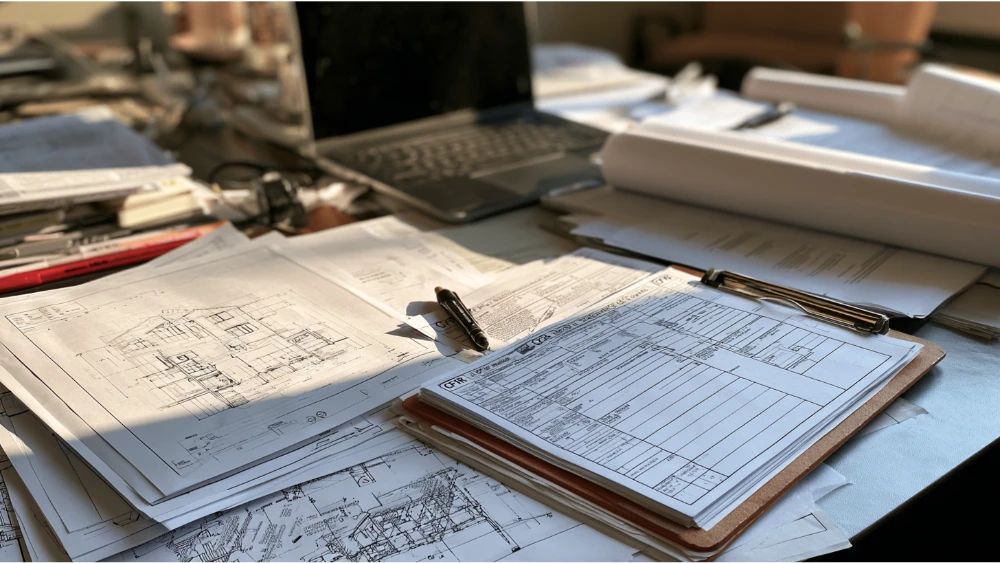
Residential energy compliance runs on three certificate types, each tied to a different phase of construction.
| Form | What it is | When |
|---|---|---|
| CF1R | Certificate of Compliance, completed during design | Submitted at plan check |
| CF2R | Certificate of Installation, completed by installers and contractors | Reviewed during construction inspections |
| CF3R | Certificate of Verification, completed by an Energy Code Ace certified rater when field verification or diagnostic testing applies | During verification and testing |
At final approval, the building department checks the project against the approved plans, the approved CF1R, required CF2Rs, and registered CF3Rs. The California Energy Commission develops the Energy Code, but local building departments issue permits and enforce it. That distinction drives how a plan set has to be structured.
Why the CF1R Must Match Your Plan Set
A Title 24 report only helps if it matches the plans your building department is reviewing. The CF1R identifies the energy performance specs chosen for compliance, and it has to align with the design features shown in the drawings and specifications. Many building departments require the CF1R to be embedded as energy compliance sheets in the plan set itself, which is one way reviewers verify compliance quickly.
When the forms and the drawings tell two different stories, the reviewer catches it and you get corrections. Common mismatch triggers:
- Window schedule lists one U-factor; the CF1R shows another
- HVAC equipment changed after submittal but the energy model wasn’t updated
- Insulation notes missing from wall or ceiling sections, which affects the thermal resistance the model assumes
- Solar or PV assumptions not coordinated with the electrical and roof plans
- A garage conversion classified as a simple remodel instead of newly conditioned space
Most firms bolt the energy documents on after the layout is finished. We do the opposite. Compliance belongs at the front of design, so the plan set moves through review with fewer surprises.
Prescriptive vs. Performance: The Two Compliance Paths

There are two ways to demonstrate compliance, and the right one depends on your design.
Prescriptive uses predefined requirements by climate zone. Each energy component, from insulation to windows to equipment, has to meet a prescribed minimum. It’s simpler but less flexible, because you can’t trade one feature against another. This path often calls for specific insulation values tied to your zone.
Performance uses CEC-approved software to model your building against an energy budget. It’s more flexible and lets you trade off among the building envelope, HVAC, water heating, and PV efficiencies, which can solve real design constraints and find real energy savings. For example, a home with a lot of glass on one wall might offset that energy use with a higher-efficiency heat pump. Performance compliance for qualifying applications requires CEC-approved 2025 software.
Either way, mandatory measures still apply: infiltration control, minimum insulation levels, equipment efficiencies, and high-efficiency LED lighting with advanced lighting controls where required.
What Changed Under the 2025 California Energy Code
The 2025 Energy Code was adopted at the CEC’s September 11, 2024 business meeting and took effect January 1, 2026. The focus areas:
- Expanded heat pump baseline for space and water heaters in many new buildings
- Electric-ready requirements in some building types
- Updated photovoltaic and battery energy storage systems standards
- Updated HVAC and lighting controls
- Ventilation updates that support indoor air quality, especially in multifamily buildings
These regulations do not mandate specific fuel types like natural gas or all-electric; the code is built around multiple compliance options. Requirements also vary across California’s 16 climate zones, so there’s no single insulation, window, or HVAC answer that works statewide. What passes in one climate zone won’t necessarily pass in another. The overall aim is to reduce wasteful heating and cooling energy consumption and ease energy demand on the grid, which delivers cost effective results for building owners over time. Because buildings account for roughly 25% of the state’s greenhouse gas emissions, tighter energy efficiency standards are one of California’s main tools to reduce greenhouse gas emissions and respond to climate change from the built environment. This reflects the state’s commitment to energy efficient buildings. The same code framework, through Title 24, Part 6, also sets efficiency requirements for non residential buildings and commercial buildings, though the residential rules are what most homeowners and builders deal with.
Building Envelope and Building Standards for ADUs and Garage Conversions
For ADUs, classification drives the requirements, and this is where projects get stuck.
- Detached new ADU: treated like a new single-family home, and PV is generally required
- Attached ADU or ADU created as an addition or alteration: Section 150.2 rules apply, and PV is not required
- Garage or unconditioned-to-conditioned conversion: complies as an addition
- JADU: defined as 500 square feet or less, within an existing or newly constructed single-family building
Getting the classification wrong changes what’s required and can send the whole submittal back. A garage conversion is a perfect example: an owner who treats a detached ADU as an alteration may skip a PV requirement the reviewer expects to see. (For a deeper breakdown, see our dedicated guide to Title 24 for ADUs.)
Common Title 24 Mistakes That Trigger Corrections
Most resubmittals come from a handful of avoidable errors:
- Treating Title 24 as an afterthought instead of part of design
- Submitting forms from an outdated California code cycle
- Using unapproved software for performance compliance
- Missing CF1R sheets in the plan set
- A CF1R that doesn’t match the drawings and specs
- Window, insulation, HVAC, or water heater specs changing after the energy model was run
- Missing field verification notes on building components that require testing
- Misclassifying an ADU, addition, or alteration
- Assuming one climate zone answer applies statewide
Each one costs weeks. A coordinated submittal keeps you out of the correction loop and helps you comply the first time through.
How Sparrow Structures Plans for Approval

We don’t just attach energy documents to a set of drawings and hand them off. We coordinate Title 24 with the plan set so the CF1R, drawings, specifications, and verification items all tell the same story. Compliance goes in at the front of design, which is how a permit-ready submittal reduces avoidable corrections. Sparrow Design & Plans is licensed and insured, holds a 98% approval rate within two submissions, and works to a typical two-week turnaround. We can’t guarantee a government approval, but we structure plans to pass review. That approach works the same way whether you’re a homeowner, an ADU owner, or one of the builders juggling several permits at once.
To prepare energy compliance, we need:
- Project type and scope
- Existing conditions or as-builts
- Conditioned floor area
- Window and door schedule
- Insulation, HVAC, and water heating approach
- Solar or PV assumptions
- Project address and climate zone
- ADU classification, if applicable
- Your local building department’s submittal requirements
The CEC also publishes free tools and reference material through Energy Code Ace, so contractors across the building industry can stay informed on California Energy Commission updates and new technologies as the code evolves. We follow those changes so your project doesn’t fall behind them.
Tell us about your project. Get your free quote and start with clarity.
Title 24 Energy Efficiency FAQ
What triggers Title 24 compliance?
New construction, additions, and alterations to the building envelope, HVAC systems, water heating, lighting, or electrical power distribution. Repairs are excluded, but component replacements like a reroof count as alterations.
What is a CF1R form?
The Certificate of Compliance, completed during design and submitted at plan check. It has to match the plans and specifications the building department is reviewing.
What is the California Title 24 solar requirement?
New detached single family homes and new detached ADUs generally require PV, which cuts electricity drawn from the grid. ADUs treated as additions do not. Requirements vary by climate zone.
How does Title 24 reduce energy costs?
By requiring an energy efficient envelope, HVAC, lighting, and water heating, compliance lowers heating and cooling costs over time and eases peak grid demand. That focus on reducing energy consumption in California buildings helps offset the upfront cost of building to code and lowers long-term energy use, which is better for both your budget and the environment.


Leave a Reply